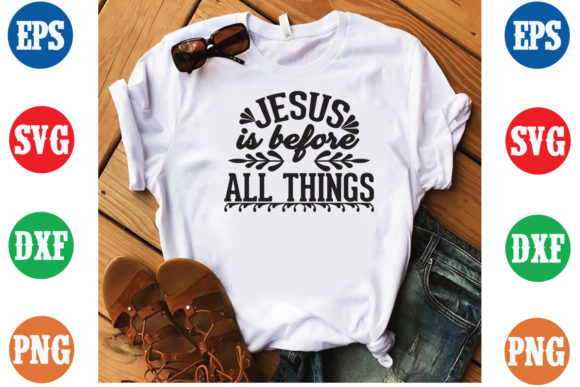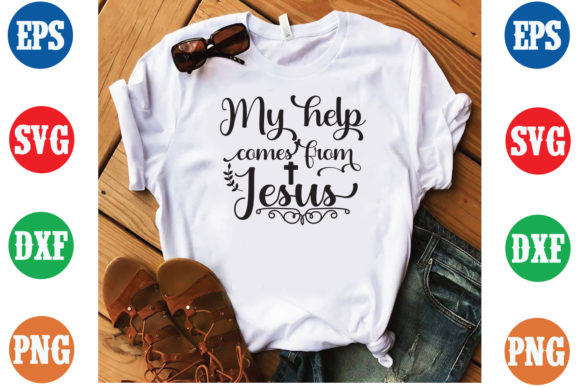
My Help Comes from Jesus T-Shirt Design
There is something quietly powerful about a well-crafted typeface that carries meaning beyond its letterforms. The My Help Comes from Jesus t-shirt design belongs to that rare category of display type that does not merely spell words—it delivers a message with visual conviction. Whether you are a designer sourcing type for a faith-based apparel line, a content creator building a consistent brand identity around spiritual themes, or a small business owner producing merchandise for a church community, this font demands attention for reasons that go well beyond its religious context.
Let us talk about what makes this design asset worth your time, where it fits into real projects, and how to get the most out of its distinctive character without falling into creative traps.
A Typeface with Presence and Purpose
At first glance, My Help Comes from Jesus reads as a confident, bold display font with strong handwritten roots. Its letterforms carry an organic weight—think broad strokes, slight irregularity in baselines, and a texture that mimics the pressure of a marker on paper rather than the sterile precision of a vector. The personality leans toward earnest, unpolished, and deeply human. This is not a font that whispers; it announces, testifies, and invites engagement.
The visual style sits somewhere between modern typography and traditional hand-lettering. It borrows the warmth of a script font but stays legible enough for short statements, which makes it particularly effective for apparel graphics. The x-height is generous, the counters are open, and the spacing is intentionally loose enough to avoid crowding when printed on fabric. For a display font that leans into emotional weight, these are not small considerations.
Why This Font Works for More Than Just Shirts
While the name points directly to t-shirt design, the typeface itself is versatile enough to carry weight across several contexts. Here is where it typically performs best:
- Apparel and merchandise: This remains its natural habitat. Screen-printed tees, hoodies, hats, and tote bags benefit from the font's bold stance and slightly imperfect edges, which read as authentic rather than mass-produced.
- Social media graphics: Instagram posts, story overlays, and quote cards for faith-based accounts gain immediate visual hierarchy. The font functions as a hero element that does not need elaborate backgrounds to hold attention.
- Packaging design: Small-batch products like candles, journals, or gift sets that carry a spiritual or inspirational angle can use this typeface to communicate warmth without resorting to generic calligraphy.
- Editorial and print: Magazine covers, booklet titles, and poster headlines in niche publications targeting Christian or motivational audiences benefit from the font's directness. It pairs naturally with clean sans serif fonts for body copy.
- Logo design: For ministries, small church groups, or faith-based startups, this typeface can form the backbone of a wordmark that feels personal without looking amateurish.
What makes these applications work is the font's ability to hold its own at various sizes. At large display sizes, the texture and stroke variation become assets. At smaller sizes, it remains readable enough for secondary messaging, though I would caution against using it for body text or long paragraphs.
Readability, Hierarchy, and Brand Perception
The way a font influences readability is not just about whether people can decode letters—it is about how fast they absorb the tone. My Help Comes from Jesus operates on an emotional level before a literal one. The slightly irregular strokes and hand-drawn quality tell the viewer: this was made by a person, not a machine. That perception is gold in an era when audiences are fatigued by corporate polish.
For brand identity work, consistency is everything. If you are building a visual language around themes of hope, service, or spirituality, this typeface anchors the emotional register. It communicates approachability. It resists coldness. And because its personality is so specific, it helps your audience recognize your content across different media without needing a logo or color palette to do the heavy lifting.
That said, the same strength can become a limitation. A font with this much personality needs space to breathe. If you pair it with other loud design elements—competing textures, multiple colors, complex backgrounds—the message can get buried. Smart visual hierarchy means reserving this typeface for the primary statement and letting supporting elements stay quiet.
Practical Tips for Choosing and Using This Font
Selecting a display font is never just about liking how it looks. You need to evaluate project fit honestly. Ask yourself a few questions before committing to My Help Comes from Jesus as part of your design toolkit:
- Does the message match the medium? This font carries spiritual and emotional weight. Using it for a corporate memo or a tech startup landing page would create cognitive dissonance. Reserve it for contexts where its voice aligns with your content.
- What is the production method? If you are screen printing, test the font at your intended print size. The stroke variations that look beautiful on screen can sometimes close up or lose detail in certain ink colors or fabric textures. Request a physical proof before committing to a large run.
- How does it pair? For most projects, I recommend pairing this display font with a neutral sans serif font like Open Sans, Montserrat, or Inter for supporting text. The contrast between a bold, organic headline and a clean, geometric body creates a professional tension that feels intentional. Avoid pairing it with another script or handwritten font unless you are aiming for a very specific, casual aesthetic.
- Check the font license. If you are using this for commercial projects—selling t-shirts, creating branded merchandise, or publishing editorial content—verify that your license covers those use cases. Many premium font foundries offer tiered licensing, and the last thing you want is a legal issue over a design asset you have already integrated into your workflow.
- Test readability from a distance. This font works best for short phrases. If your t-shirt design includes a verse or statement longer than six to eight words, consider breaking it into two lines or using the font only for the key phrase while setting the rest in a simpler typeface.
Where the Font Shines in Digital and Print Contexts
Let me give you a few realistic scenarios so you can see how this plays out in practice.
A friend of mine runs a small publishing company that produces devotional journals and guided prayer books. She used My Help Comes from Jesus as the title treatment for her newest cover. The journal itself uses a muted, earth-toned palette with minimal ornamentation. The font's strong, grounded appearance gave the cover a physical presence that felt appropriate for a product meant to be held and used daily. The inside pages use a light serif font for body text, and the contrast between the two typefaces creates a clear visual hierarchy without extra design effort.
Another example comes from a Instagram creator who builds content around music and worship. She uses the font in her story templates to highlight lyrics and short reflections. The organic strokes echo the handmade feel of her photography, and her engagement increased noticeably after she standardized on a handful of display fonts that included this one. The reason is simple: consistency builds recognition, and recognition builds trust.
A Note on Licensing and Professional Use
I cannot stress this enough: if you are using this font in any commercial capacity, treat the licensing as seriously as you would any other business expense. Many designers and small business owners get tripped up by assuming a free download or a single-use license covers all their projects. My Help Comes from Jesus is a premium font in most foundries, and the creators deserve fair compensation for the work that went into crafting those letterforms. Budget for the license early, read the terms carefully, and keep your receipts in case you are ever audited.
For personal projects like a one-off gift shirt or a church group event, a standard desktop license usually suffices. For e-commerce stores, app interfaces, or branding packages you sell to clients, look for a commercial or extended license. When in doubt, ask the foundry directly—most are responsive and happy to clarify.
Final Observations and Recommendations
My Help Comes from Jesus is not a font for every job, and it does not pretend to be. Its strength lies in its specificity. It works because it has a voice, and that voice resonates with a particular audience in a particular context. If your project involves faith, inspiration, community, or personal storytelling, this typeface can become a valuable design asset that elevates your work beyond the generic.
Pay attention to spacing. Experiment with color. Test it on the actual substrate you plan to use. And once you find the right application, trust the font to do what it was designed to do: deliver a message that feels human, direct, and rooted in conviction.
Good design is not about using every tool in the box. It is about knowing which tool fits the job, and using it with confidence. This font earns a place in your toolkit if you respect its character and use it deliberately.